

It usually starts small.
A few thin cracks appear in your parking lot. Maybe there’s a shallow pothole near the entrance. At first, it doesn’t seem urgent, but you know it shouldn’t be ignored.
Many property owners aren’t sure whether they need crack filling or asphalt patching. The two repairs sound similar, but they serve very different purposes. Choosing the wrong one can lead to wasted money and recurring damage.
In this guide, we’ll clearly explain the difference between crack filling and patching, when each is appropriate, and how to determine what your lot actually needs.
As an experienced asphalt maintenance provider, Navarro Paving helps property owners choose the right repair solution before minor issues turn into major expenses.
What Is Crack Filling?
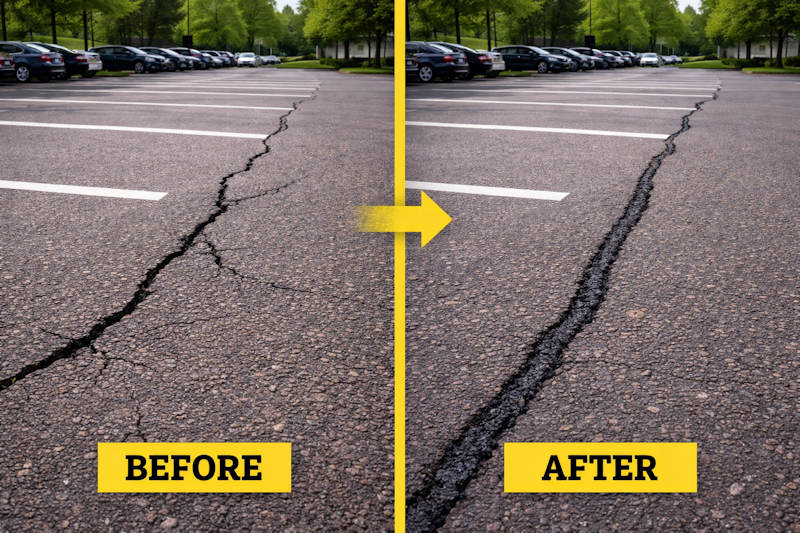
Crack filling is a preventative asphalt maintenance treatment used to seal non-structural cracks in pavement. The primary goal of crack filling is preventing water intrusion.
Water is the biggest threat to asphalt. Once it seeps into cracks and reaches the base layer, it weakens structural support and accelerates deterioration.
Crack filling typically lasts 2–5 years, depending on traffic volume, climate, and maintenance practices.
How It Works
A specialized rubberized sealant is applied into narrow cracks to:
- Seal out water
- Prevent debris infiltration
- Reduce expansion from freeze-thaw cycles
The material remains flexible, allowing the pavement to expand and contract without reopening the crack immediately.
Ideal Situations for Crack Filling
Crack filling works best when:
- Cracks are long and narrow
- There is no base failure underneath
- The surrounding asphalt is still solid
- Damage is caught early
For example, a parking lot with several thin linear cracks but no crumbling or sinking areas is an excellent candidate for crack filling.
It is one of the most cost-effective ways to extend pavement life, but it is strictly preventative, not structural.
What Is Asphalt Patching?
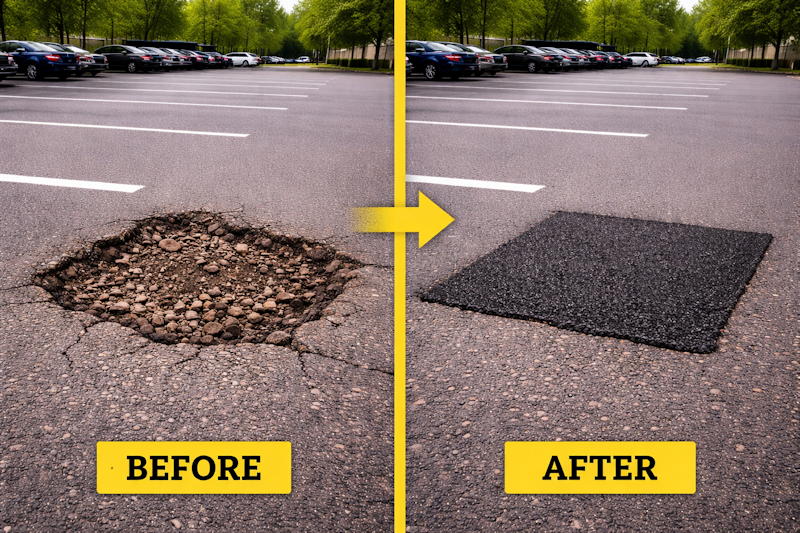
Asphalt patching is a structural repair method used when pavement has already failed. Patching involves removing damaged asphalt and replacing it with new material to restore structural integrity.
Properly installed asphalt patches can last 5–10 years or longer, depending on traffic and environmental conditions.
Patching restores strength to the pavement and prevents further deterioration from spreading outward.
There are two common types:
- Surface patching – Repairs localized surface damage
- Full-depth patching – Removes and replaces asphalt down to the base layer
When Patching Is Necessary
Patching is required when the damage goes beyond surface cracking.
You likely need patching if you see:
- Potholes
- Alligator cracking (web-like crack patterns)
- Loose or crumbling asphalt
- Soft spots underfoot
- Areas where the pavement is sinking
Simply filling cracks in these areas will not solve the problem because the underlying structure has already failed. Patching is required in those cases.
Key Differences Between Crack Filling and Patching
| Feature | Crack Filling | Asphalt Patching |
|---|---|---|
| Purpose | Preventative maintenance | Structural repair |
| Type of Damage | Narrow, non-structural cracks | Potholes, alligator cracking, soft spots |
| Cost Level | Lower cost | Higher cost |
| Longevity | 2–5 years | 5–10+ years |
| Repair Depth | Surface-level seal | Surface or full-depth structural repair |
In simple terms:
- If the asphalt is still strong and intact → crack filling.
- If the pavement is breaking apart or sinking → patching.
How to Know Which Your Lot Needs
You can perform a basic visual inspection before calling a professional. Below are practical indicators property owners and managers can look for.
1. Examine the Width and Pattern of Cracks
The size and pattern of cracks are strong indicators of severity.
- Hairline or narrow cracks (less than ¼ inch wide) are typically non-structural and good candidates for crack filling.
- Long, straight cracks that follow pavement seams or run across the lot often result from normal expansion and contraction.
- Wide cracks (greater than ½ inch) may signal deeper movement in the base layer.
- Spiderweb or “alligator” cracking usually indicates structural failure and requires patching.
If cracks appear interconnected and the asphalt between them looks fatigued, patching is likely necessary.
2. Check for Loose or Crumbling Asphalt
Run a visual inspection around damaged areas.
If you notice chunks of asphalt breaking away, loose gravel surfacing, or edges that crumble when touched, the pavement has likely deteriorated beyond simple sealing.
Crack filler will not bond effectively to unstable asphalt, and patching may be required to restore strength.
3. Look for Potholes or Depressions
Potholes are a clear sign that the pavement structure has already failed. They form when water penetrates cracks, weakens the base, and traffic pressure causes the surface to collapse.
If you see:
- Bowl-shaped holes
- Areas where asphalt has completely broken apart
- Depressions that collect debris
Patching, often full-depth patching, is the correct repair method.
4. Watch for Water Pooling
Standing water is a major red flag.
If water consistently pools in certain areas after rain, it may indicate sub-base weakness, settling, or surface deformation.
Crack filling alone will not correct drainage problems. In these cases, structural repairs such as patching or localized resurfacing may be necessary.
5. Feel for Soft or Unstable Areas
If safe to do so, walk the lot and pay attention to how the pavement feels underfoot.
Signs of deeper problems include:
- Spongy or soft areas
- Slight movement when stepped on
- Noticeable sinking under vehicle weight
These symptoms suggest base failure, which requires structural repair rather than surface sealing.
6. Consider the Age of the Pavement
The overall condition and age of your asphalt also matter. Newer lots with isolated cracks are typically good candidates for crack filling. Older lots with widespread cracking and surface fatigue may require patching in multiple areas.
If the pavement has not been maintained regularly, small cracks may already have progressed beneath the surface.
When Both Methods May Be Necessary
Large parking lots often require a combination approach.
For example:
- Crack filling may be used across the majority of the lot as routine maintenance.
- Patching may be required in isolated areas with structural failure.
This comprehensive strategy protects the pavement as a whole while addressing problem spots individually.
Preventative crack filling slows deterioration across the surface, while targeted patching restores strength where needed. Together, they form a smart, long-term maintenance plan that saves money over time.
Frequently Asked Questions
Choose the Right Repair Before Damage Spreads
The core difference is simple:
- Crack filling prevents damage.
- Patching repairs structural failure.
Addressing problems early is always more affordable than waiting for deterioration to spread. Even small cracks can quickly evolve into potholes if ignored.
A professional inspection ensures you receive the correct repair, not just the cheapest or quickest option.
If you’ve noticed cracks or potholes in your lot, schedule an evaluation with Navarro Paving today. The right repair at the right time can protect your pavement, and your budget, for years to come.

